Bakuchiol vs Retinol: The Gentle Alternative From Ayurveda, Explained
Retinol works, but not every skin can live with it. Bakuchiol is the plant ingredient named as its gentler alternative, and it comes from a seed Ayurveda has used for centuries. Here is what the research shows and how to use it.
In this guide
Retinol is the ingredient dermatologists reach for first when the concern is fine lines. It is also the one many people quit. The dryness and the stinging are real, and sensitive skin often never gets past them.
Bakuchiol is the plant ingredient most often named as the gentler alternative. What few articles mention is where it comes from: the seeds of a plant that Ayurveda has called bakuchi for centuries. This guide covers what bakuchiol is, what the research really shows next to retinol, who it suits and how to use it at night.
Key takeaways
- Bakuchiol is a compound found in the seeds of the babchi plant, known in Ayurveda as bakuchi.
- In a 12-week clinical trial, a 0.5% bakuchiol cream performed about as well as a 0.5% retinol cream on wrinkles and dark spots, with less scaling and stinging.
- It is not a form of vitamin A. It is a different molecule that people use for the same goals.
- It fits best in the evening, as part of a simple routine you can keep up every night.
What is bakuchiol?
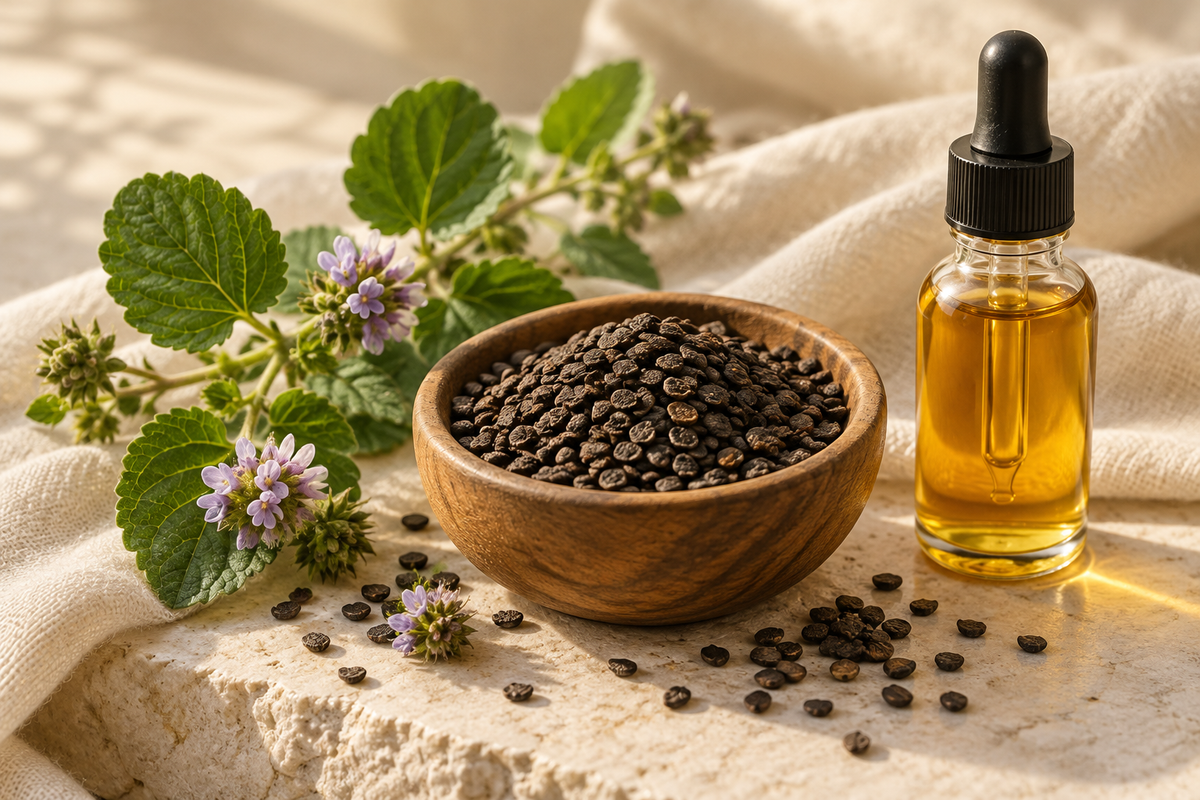
Bakuchiol is a natural compound found in the seeds of Psoralea corylifolia, a plant with purple flowers that is usually called babchi. The plant has a long history in both Indian and Chinese traditional medicine. In Ayurveda its Sanskrit name is bakuchi, which is where the modern ingredient gets its name.
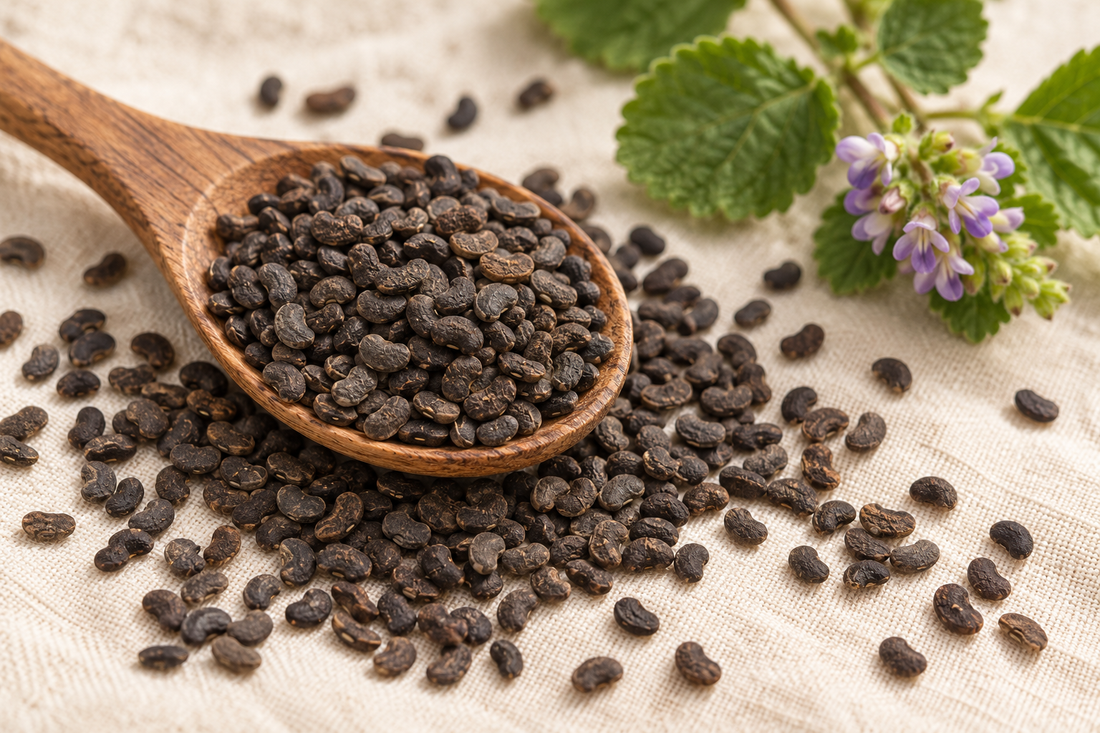
In skincare you will meet it in two forms, and they are not the same thing:
Bakuchiol
The single compound, isolated and purified. It is usually listed with a percentage, such as 0.5% or 1%.
Bakuchi oil
Also sold as babchi oil, this is the oil of the seed itself. It is the traditional Ayurvedic preparation, and it contains bakuchiol along with the seed's other natural components.
Bakuchiol vs retinol: what the research shows
Retinol is a form of vitamin A. The American Academy of Dermatology describes retinoids as ingredients that speed up the turnover of surface skin cells and boost collagen, and retinol is routinely used to improve uneven skin tone, pigmentation and texture. It has decades of research behind it.
Bakuchiol is not related to vitamin A at all. The two are compared because of a 2019 study in the British Journal of Dermatology. Researchers asked 44 people to use either a 0.5% bakuchiol cream twice a day or a 0.5% retinol cream once a day for 12 weeks, without knowing which one they had been given.
- 44 people took part
- 12 weeks of daily use
- 0.5% strength of both creams
The results:
- Both creams significantly reduced wrinkle surface area and dark spots.
- There was no statistically significant difference between the two.
- The people using retinol reported more scaling and stinging.
The authors concluded that bakuchiol is comparable to retinol for the signs of sun-related skin aging, and better tolerated. One honest caveat: this is a single, small study. Retinol still has far more evidence behind it, and more research is needed to compare bakuchiol with prescription retinoids.
Retinol and bakuchiol at a glance
Retinol
- What it is A form of vitamin A
- Research Decades of studies
- Common complaints Dryness and irritation
- Sun Can make skin more sensitive to the sun
- Pregnancy Should not be used
- How it is used At night, starting every other night
Bakuchiol
- What it is A plant compound from babchi (bakuchi) seeds
- Research Fewer, smaller studies, including one head-to-head trial
- Common complaints Less scaling and stinging than retinol in the trial
- Sun Not known to increase sun sensitivity. Wear sunscreen either way
- Pregnancy Not enough research yet. Ask your doctor first
- How it is used Once or twice a day
Who is bakuchiol a good fit for?
Bakuchiol tends to appeal to three groups:
- Skin that could not get along with retinol. If every attempt ended in redness and flaking, a gentler route is worth trying. Cleveland Clinic notes that bakuchiol may be a good alternative to retinol for sensitive skin.
- Dry or mature skin. Skin that is already dry rarely enjoys an ingredient known for dryness. A rich night cream built on plant oils moisturizes while it works.
- Anyone who wants a simple routine. There are no "retinol nights" to plan around. You use it every evening and get on with your life.
And who should stay with retinol? If your skin tolerates it well, there is no reason to switch. It remains the better-studied option, and a dermatologist can guide you on strength.
Same goal as retinol. A gentler way to get there.
How to use bakuchiol at night
Evening is the natural place for it. Your skin is clean, nothing has to sit under makeup and a richer texture has hours to sink in.
- Cleanse Wash off the day with a gentle cleanser and pat your skin dry.
- Serums first If you use a serum or a face oil, apply it before your cream.
- A pea-sized amount Massage your bakuchiol cream into face and neck with gentle upward strokes. Avoid the eye area.
- Every evening Make it the last step before bed, and wear sunscreen the next morning.
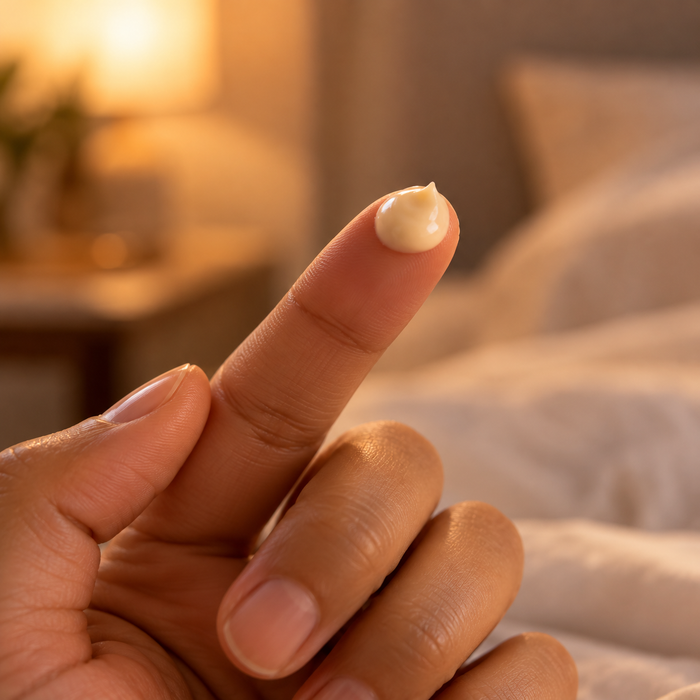
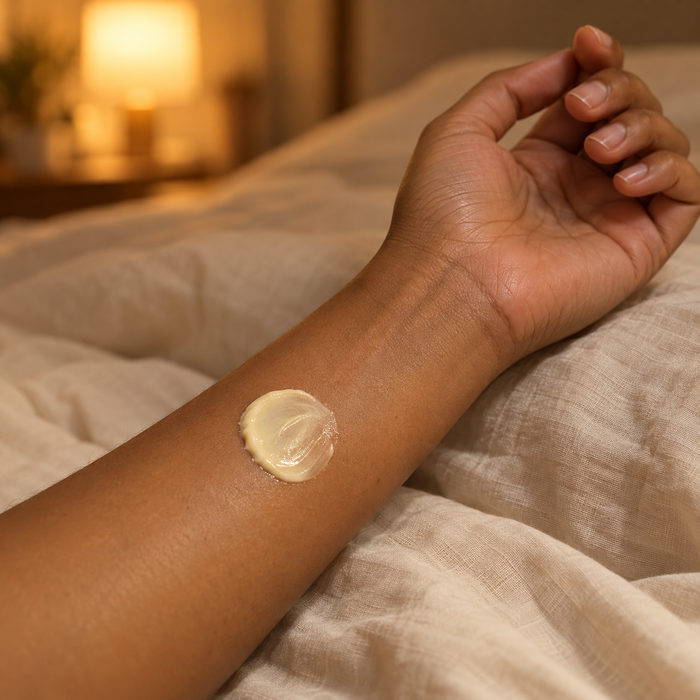
New to it? Patch test first. The American Academy of Dermatology suggests a quarter-sized spot where the product will not be rubbed or washed away, such as the underside of your arm, twice a day for seven to ten days. Bakuchiol is generally considered safe for most people, but any ingredient can irritate some skin.
Where our night cream fits
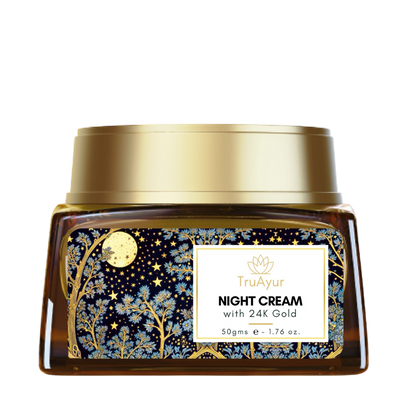
Our 24K Gold Ayurvedic Night Cream is built around bakuchi oil, the traditional seed oil that bakuchiol comes from. Around it sit saffron, turmeric, licorice and centella asiatica from the Ayurvedic side, plus familiar names such as niacinamide, a peptide, shea butter and jojoba oil. It is rich, it is made to be the last step of your evening, and it comes as a serum layer and a cream layer in one jar, which you swirl together with the spatula provided. The cream is made to soften the look of fine lines and dryness overnight, without a retinol routine.
How long does bakuchiol take to work?
Think in months, not days. The trial ran for 12 weeks, with photographs taken at the start and at weeks 4, 8 and 12.
- Weeks 1 to 4 Softer, better-moisturized skin is usually what you notice first.
- Weeks 4 to 8 Keep going every evening. The look of lines and uneven tone changes slowly.
- Week 12 The point where the trial measured a significant reduction in wrinkles and dark spots.
Whichever week you are in, it only works with nightly use.
Sources
- Dhaliwal S, et al. Prospective, randomized, double-blind assessment of topical bakuchiol and retinol for facial photoageing. British Journal of Dermatology. 2019;180(2):289-296.
- American Academy of Dermatology. Retinoids and retinol.
- American Academy of Dermatology. How to test skin care products.
- Cleveland Clinic. Should You Be Using Bakuchiol in Your Skin Care Routine? January 2024.
Questions people ask
Is bakuchiol as effective as retinol?
Is bakuchi oil the same as bakuchiol?
Can I use bakuchiol every night?
Does bakuchiol make skin sensitive to the sun?
Can I use bakuchiol during pregnancy?
Can I use bakuchiol with vitamin C or other actives?
This article is for general education and is not medical advice.